What Haircut Should I Get? Find Your Cut by Face Shape
A haircut is one of the few decisions you can't preview before you commit. You sit in the chair, describe what you want, and find out — too late — whether it actually suits you.
Here's what stylists know that most people don't: the "right" haircut isn't about what's trending. It comes down to your face shape, your hair type, and how much time you'll realistically spend styling it. Get those three right and almost any cut looks intentional. Get them wrong and even a great cut fights your face.
This guide covers all three — and every example below is a real before-and-after on the same person, so you can see the difference instead of just reading about it.
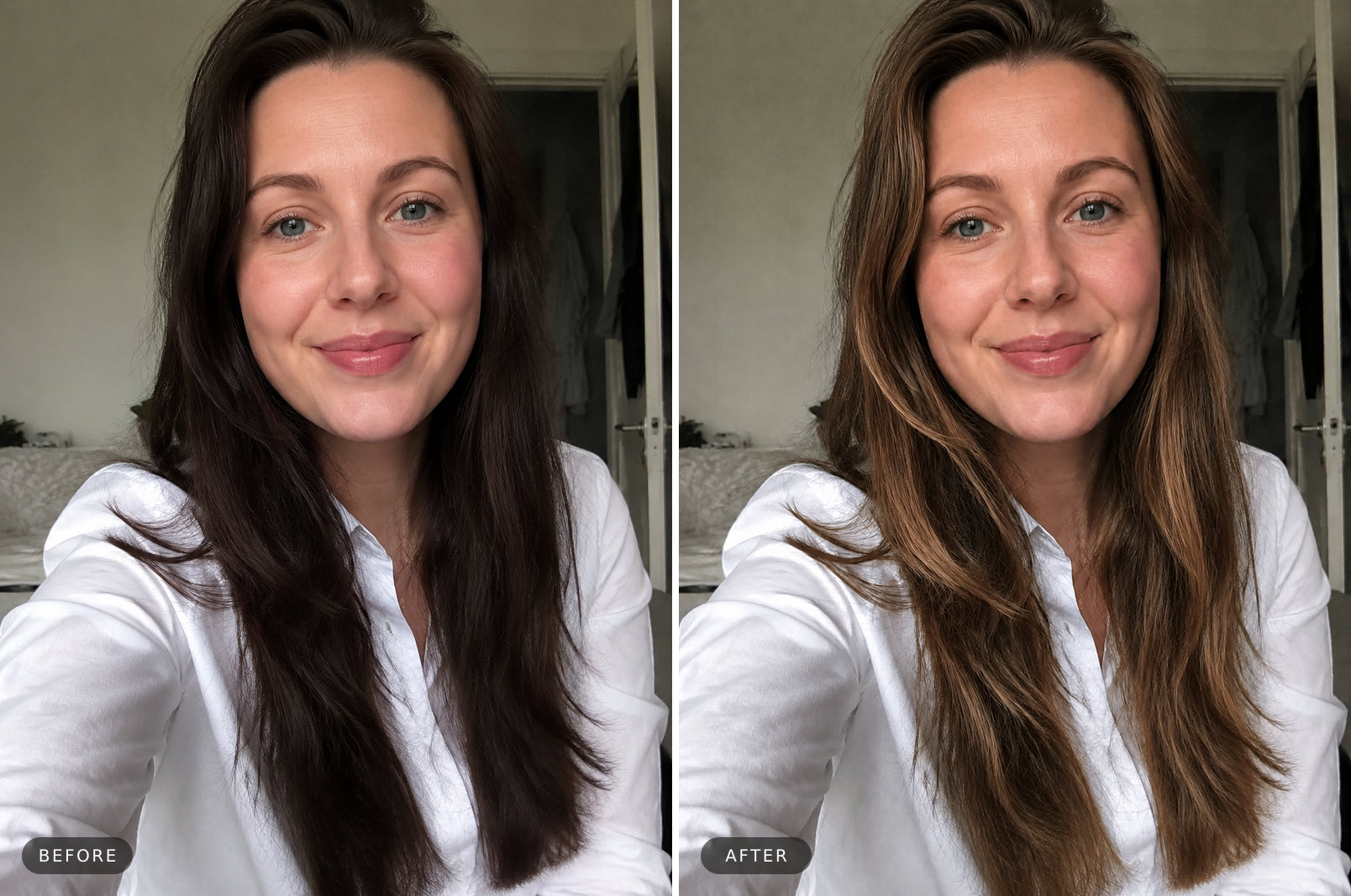
One selfie, before and after. The face, features and lighting stay exactly the same — only the hair changes. That's what a Stylery preview looks like, whether you're trying a new cut or a new color.
The 3 things that actually decide your haircut
- Face shape — balances your proportions. This is the big one.
- Hair type — straight, wavy, curly, thin or thick changes how any cut falls.
- Maintenance — the most flattering cut in the world is useless if you won't style it every morning.
Step 1 — Find your face shape
Pull your hair back and look straight into a mirror, or take a front-facing selfie. Check four things:
- Length vs width — is your face longer than it is wide, or about equal?
- Jaw — soft and rounded, or sharp and angular?
- Cheekbones — are they the widest part of your face, or about even with your jaw?
- Hairline — wide forehead, or narrow?
Then match yourself to one of these:
- Oval — length about 1.5× the width, gently rounded jaw. The balanced baseline.
- Round — length roughly equal to width, soft jaw, full cheeks.
- Square — length roughly equal to width, with a strong angular jaw.
- Heart — wide forehead narrowing to a pointed chin.
- Long (Oblong) — noticeably longer than it is wide.
- Diamond — narrow forehead and chin, with wide cheekbones.
Still not sure? Stylery can read your face shape straight from a selfie, so you don't have to guess.
Step 2 — Match a cut to your shape
Round face
Goal: add length and angles to slim a fuller face.
- Try: layers that fall below the chin, side-swept bangs, a textured lob, and height at the crown. For men, a pompadour or quiff with shorter sides adds the vertical line you want.
- Skip: blunt chin-length bobs, straight-across bangs, and short rounded cuts — they all echo the roundness.
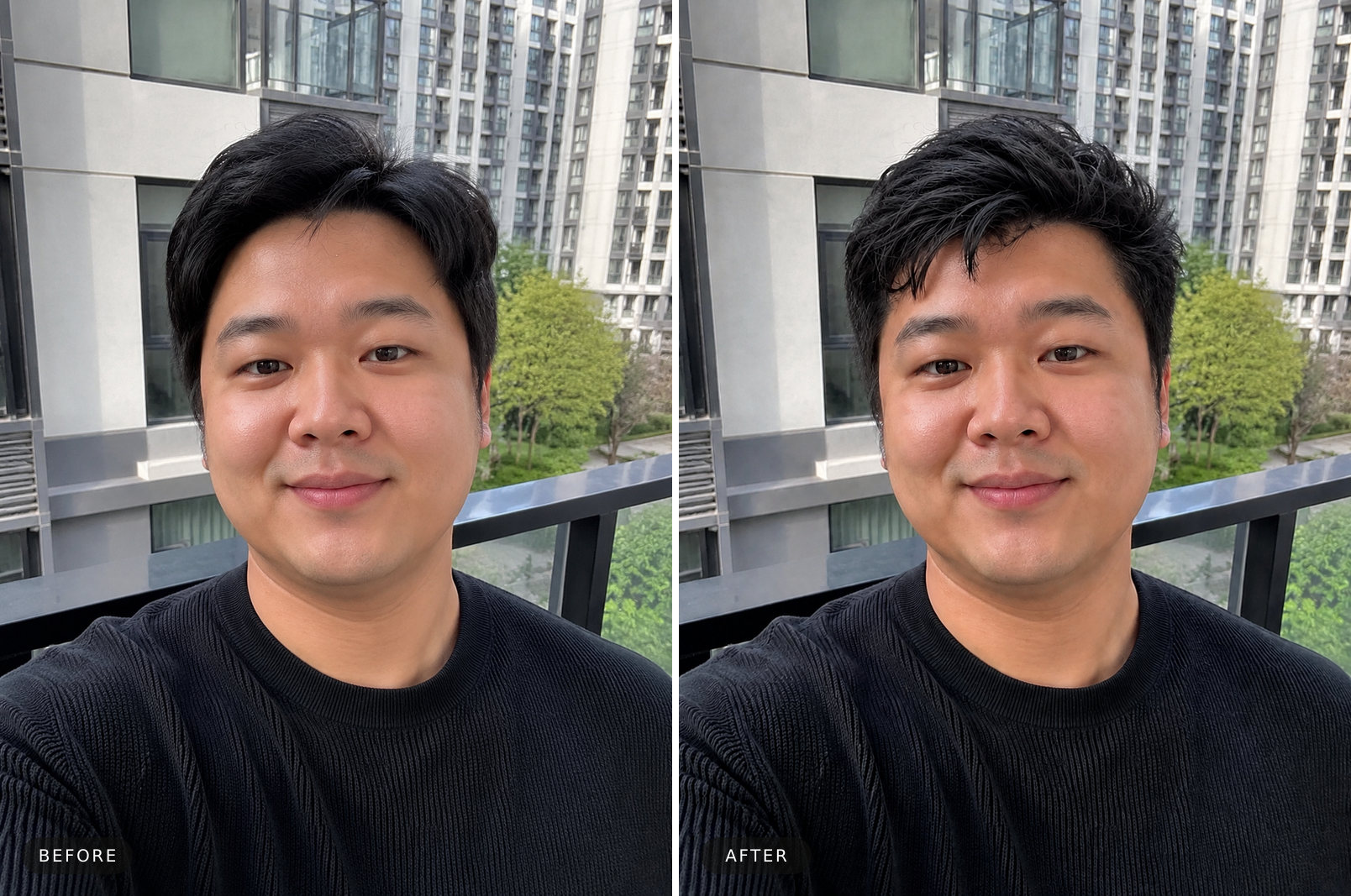
Round face: a quiff with shorter sides adds vertical height and breaks up the roundness — the same job a pompadour does.
Oval face
Goal: you've got the balanced shape, so the job is simply not to throw it off.
- Try: almost anything. Blunt bobs, long layers, a pixie, curtain bangs — oval faces have the most freedom to experiment, so pick by hair type and lifestyle instead. For men, an oval face suits nearly any cut too, from a clean crew cut to longer textured styles.
- Skip: heavy, face-covering styles that hide your proportions, or extreme volume on top that drags your face longer.
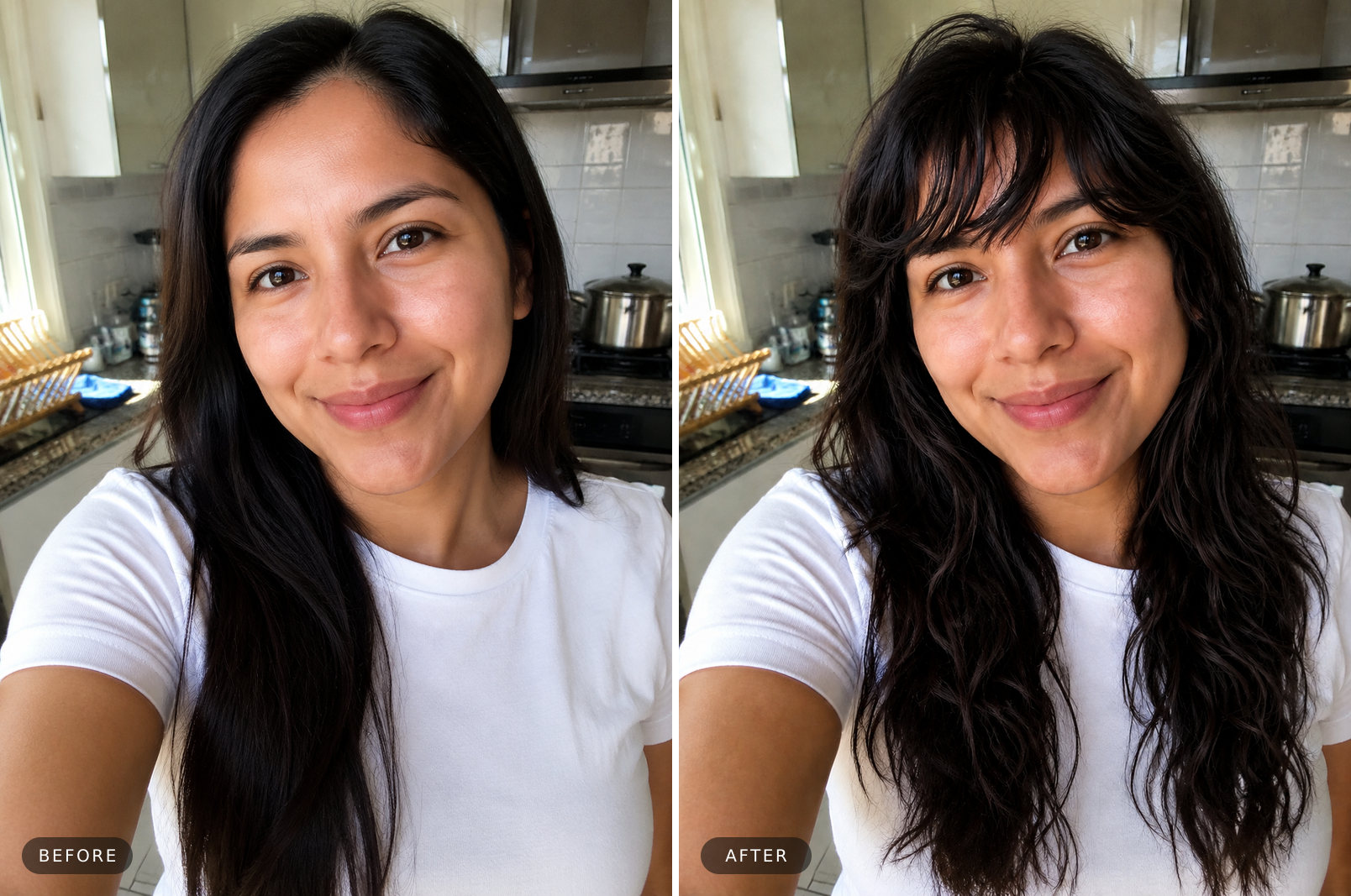
Oval faces can carry almost anything. Here, curtain bangs and a lived-in shag add movement without fighting the balanced proportions.
Square face
Goal: soften a strong, angular jaw.
- Try: soft layers, waves, side-swept styles, and wispy bangs. Length that falls past the jaw draws the eye down and rounds off the corners. For men, a textured crop or a side part softens the angles, and a short beard can balance the jaw.
- Skip: blunt cuts that stop right at the jawline and severe, ruler-straight styles — they sharpen what's already sharp.
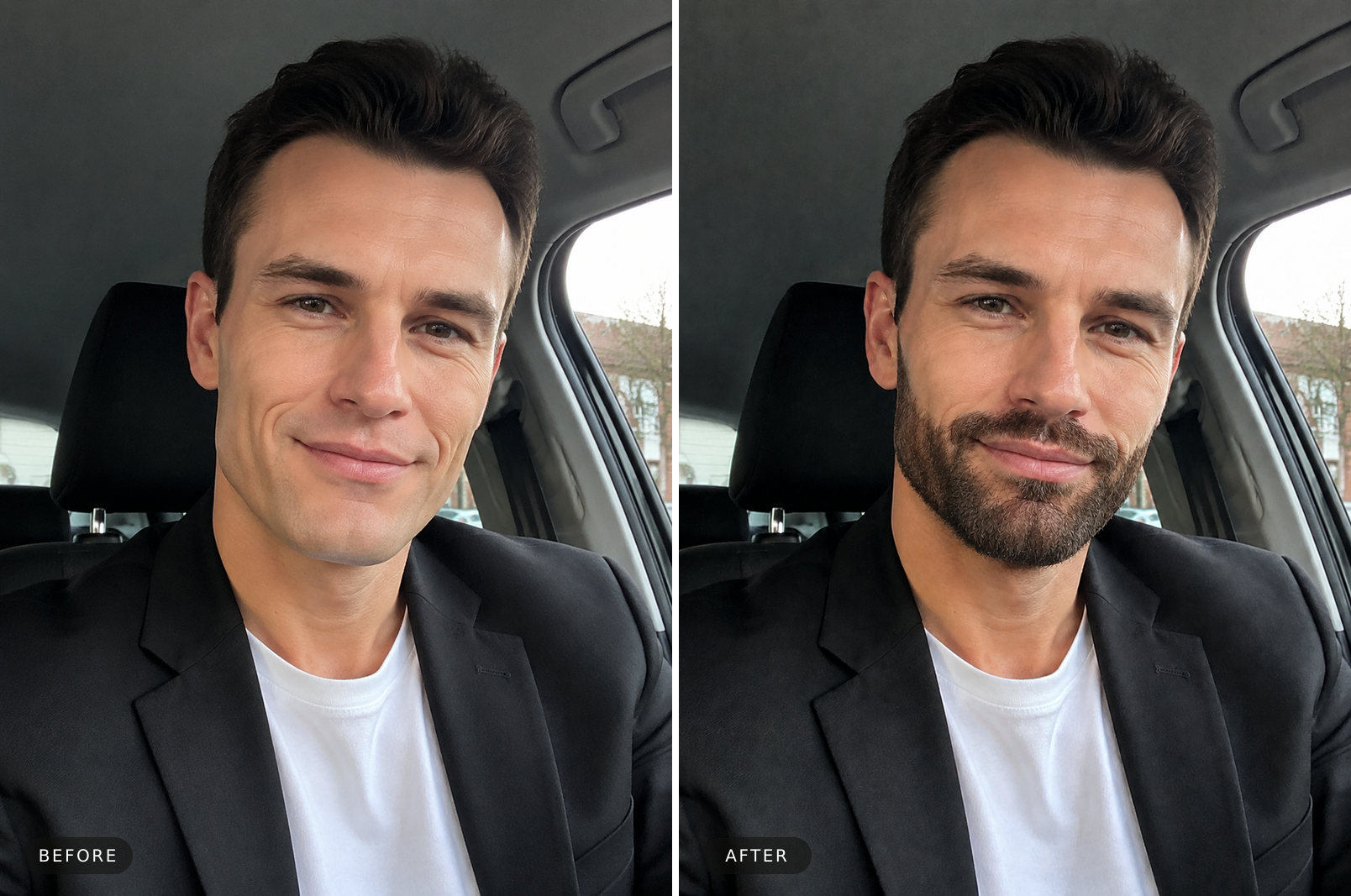
Square face: a short, even beard softens and balances a strong, angular jaw — one of the easiest changes for men to test before committing.
Heart face
Goal: balance a wide forehead against a narrow chin by adding weight lower down.
- Try: chin-length bobs and lobs, layers that hit around the jaw, and side-swept or curtain bangs to soften the forehead. Fullness toward the ends widens the lower face. For men, a short beard or stubble adds visual weight to a narrow chin, with a little length or texture through the sides rather than tight back-and-sides.
- Skip: styles with lots of volume at the crown that taper to the chin — they exaggerate the point — and tight slicked-back looks that expose the full forehead.
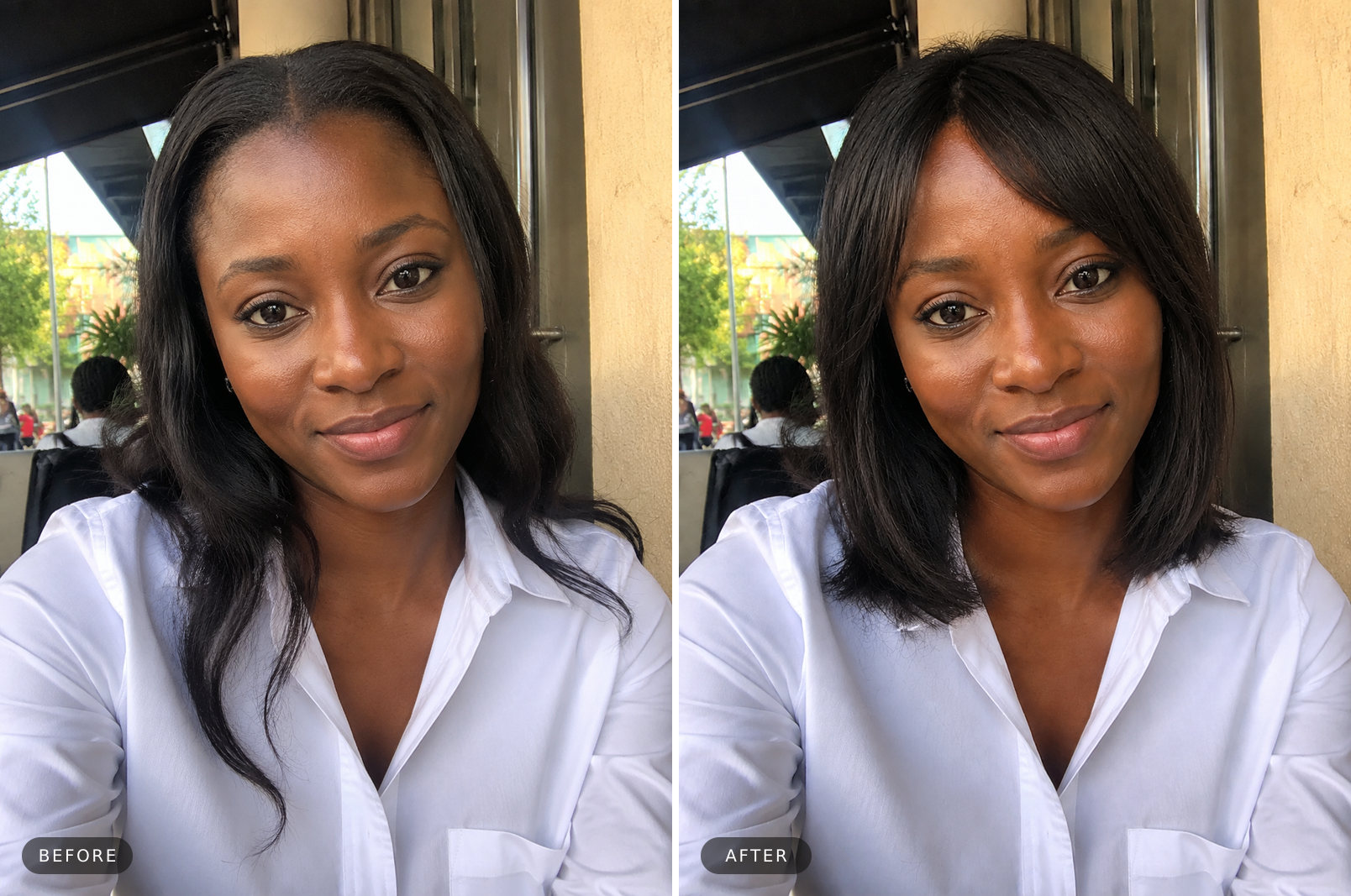
Heart face: a chin-length, face-framing bob adds weight lower down to balance a wider forehead against a narrower chin.
Long (Oblong) face
Goal: add horizontal width and avoid anything that adds more length.
- Try: bangs (they visually shorten the face), waves and curls, layers around the cheeks, and a chin-to-collarbone length. For men, keep some volume on the sides with a fringe rather than height on top.
- Skip: very long straight hair, tall volume on top, and flat center parts — all of them stretch the face further.
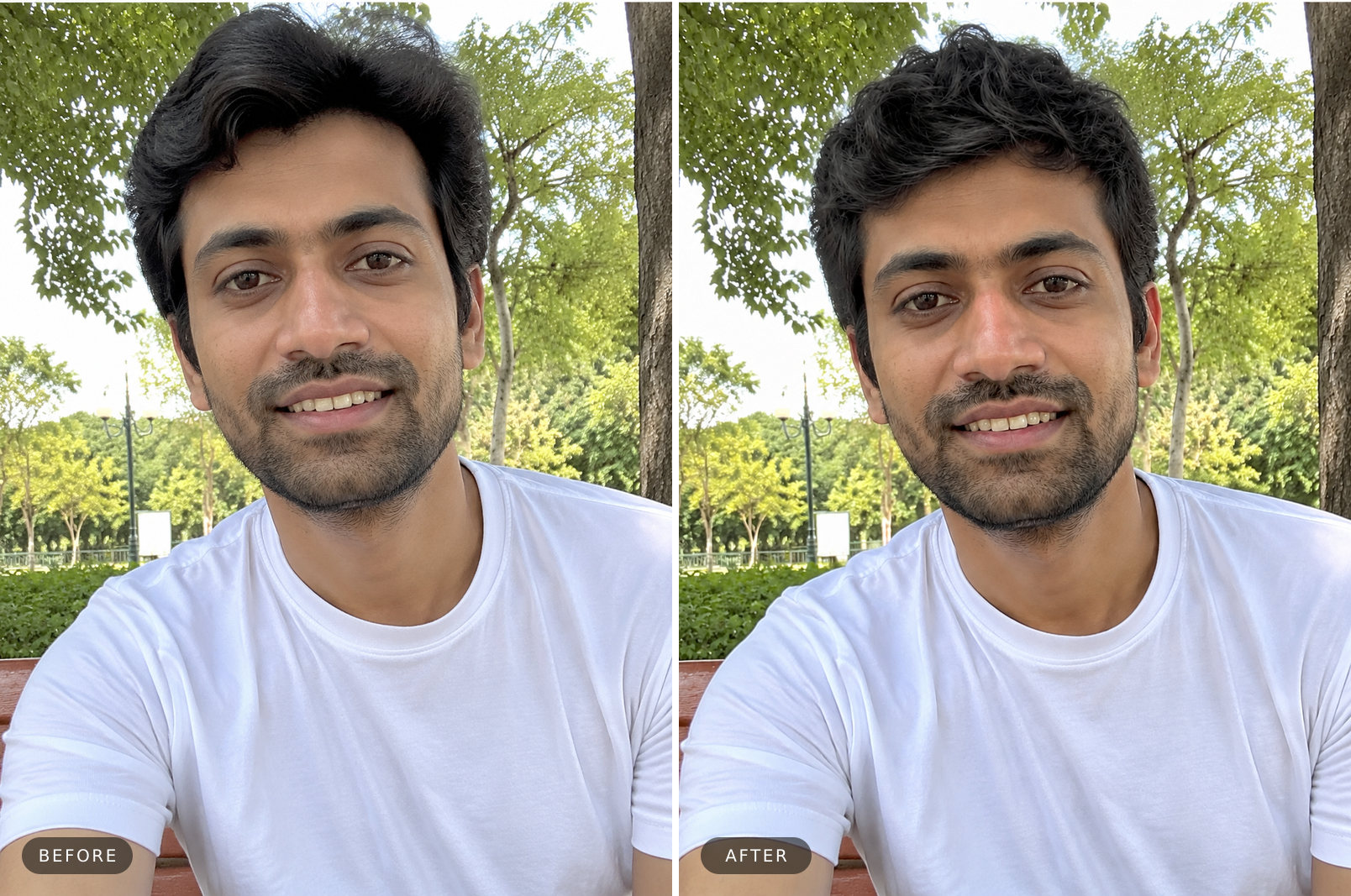
Long face: a soft fringe with volume kept on the sides — not the top — visually shortens and widens the face.
Diamond face
Goal: add width at the forehead and chin to balance wide cheekbones.
- Try: bangs to widen the forehead, chin-length styles, side-swept looks, and textured ends around the jaw. A bob sits well here. For men, a fuller fringe or some length on top with textured sides softens prominent cheekbones — avoid very tight sides.
- Skip: styles pulled tight at the sides and very short crops — both put all the focus on your cheekbones.
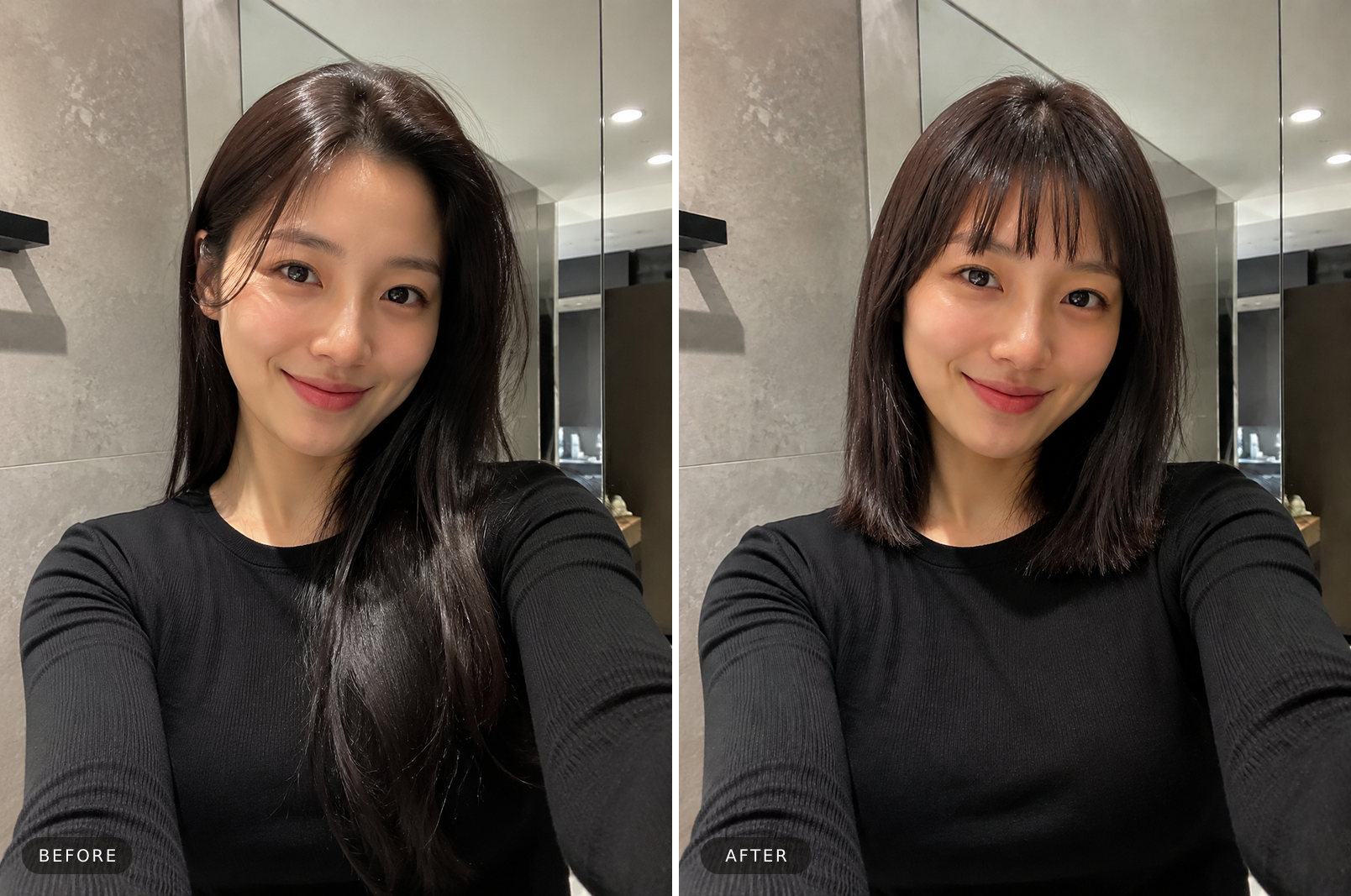
Diamond face: bangs widen the forehead and a chin-length blunt bob adds balance against wide cheekbones.
Step 3 — Factor in your hair type
The same cut behaves completely differently depending on your texture. Quick rules:
- Fine or thin hair: blunt ends plus light layers create the illusion of body. Avoid heavy long layering, which can look stringy.
- Thick hair: long layers remove weight so the cut doesn't puff out.
- Curly or coily hair: get it cut dry — length shrinks as it dries, and a wet cut almost always ends up shorter than you wanted.
- Straight hair: it shows every line, so precise, blunt cuts look the sharpest.
Don't guess — see it on your own face first
You don't have to gamble in the salon chair. Stylery lets you try any of the cuts and colors above on your own face before you commit — so you walk in already knowing what works.
Here's how it works:
- Upload one selfie. A clear, front-facing photo is all it takes.
- Pick a look. Choose a cut, a color, or both — from a textured lob to curtain bangs to a honey balayage.
- See the real result. Stylery previews the look on your actual face and keeps your features, skin and expression exactly the same. Only the hair changes.
Every image in this guide is a real Stylery before-and-after on the same person — that's exactly what you'll see with your own selfie. No filters, no generic model, no imagining how "a textured lob" might land on you. You see you, with the new look, right next to how you look now.
It takes a few seconds, it's free to try, and it could save you from a cut you regret for the next three months.
See your next haircut on your own face →
Read next: Browse every haircut you can try on →
Frequently asked questions
What haircut suits a round face?
Layers that fall below the chin, side-swept bangs, and height at the crown all add the length and angles that slim a round face. Avoid blunt chin-length bobs and straight-across bangs, which echo the roundness. For men, a pompadour or quiff with short sides works well.
How do I know my face shape?
Compare your face's length to its width, check whether your jaw is soft or angular, and note where your face is widest. Equal length and width with a soft jaw is round; clearly longer than wide is oblong; a strong jaw is square; a wide forehead with a narrow chin is heart; wide cheekbones with a narrow forehead and chin is diamond; and a balanced roughly 1.5-to-1 ratio is oval.
Can I see a haircut on myself before I cut it?
Yes. Stylery lets you upload a selfie and previews real haircuts and colors on your own face while keeping your features unchanged, so you see how a cut actually looks on you before you commit to it.
What's the most low-maintenance flattering haircut?
The cut that works with your natural texture needs the least styling. A blunt mid-length cut on straight hair, a soft lob on waves, or a shaped layered cut on curls will all look intentional with minimal effort.