Hairstyles for Round Faces: What Works and What to Skip
Round is the face shape with the biggest gap between how much advice exists and how useful it is. "Add volume on top" — sure. But which actual cuts? And why do some short cuts look fantastic on round faces while others add ten pounds?
The logic is simpler than the lists make it seem. A round face is roughly as long as it is wide, with soft edges — so the goal of a haircut is to add length and angles: vertical lines, height at the crown, layers that pull the eye downward. And the mistakes all share one root: anything that repeats the circle — rounded silhouettes, width at cheek level, hard horizontal lines — makes the face read rounder.
Every example below is a real preview generated on the same person's photo, so you can see what the cut changes — not imagine it from a model who was cast for the style.
Not sure your face is actually round? Measure it from one selfie — free, in your browser — before you commit to the rules below.
The three rules (everything else follows)
- Go vertical. Height at the crown, volume on top, cuts that finish below the chin. Length is what a round face doesn't have — give it some.
- Add angles. Diagonal lines — a side part, side-swept bangs, choppy layers — break up softness. Symmetry and curves emphasize it.
- Keep width off the cheeks. The widest point of a round face is the cheeks. Volume that sits right there — rounded bobs, tight curls ending at cheek level — doubles down on it.
For women: the cuts that work
The shag — angles everywhere
A shag is the rule book in one haircut: choppy layers create diagonal lines, curtain fringe opens the center of the face, and the volume sits at the crown instead of the cheeks.
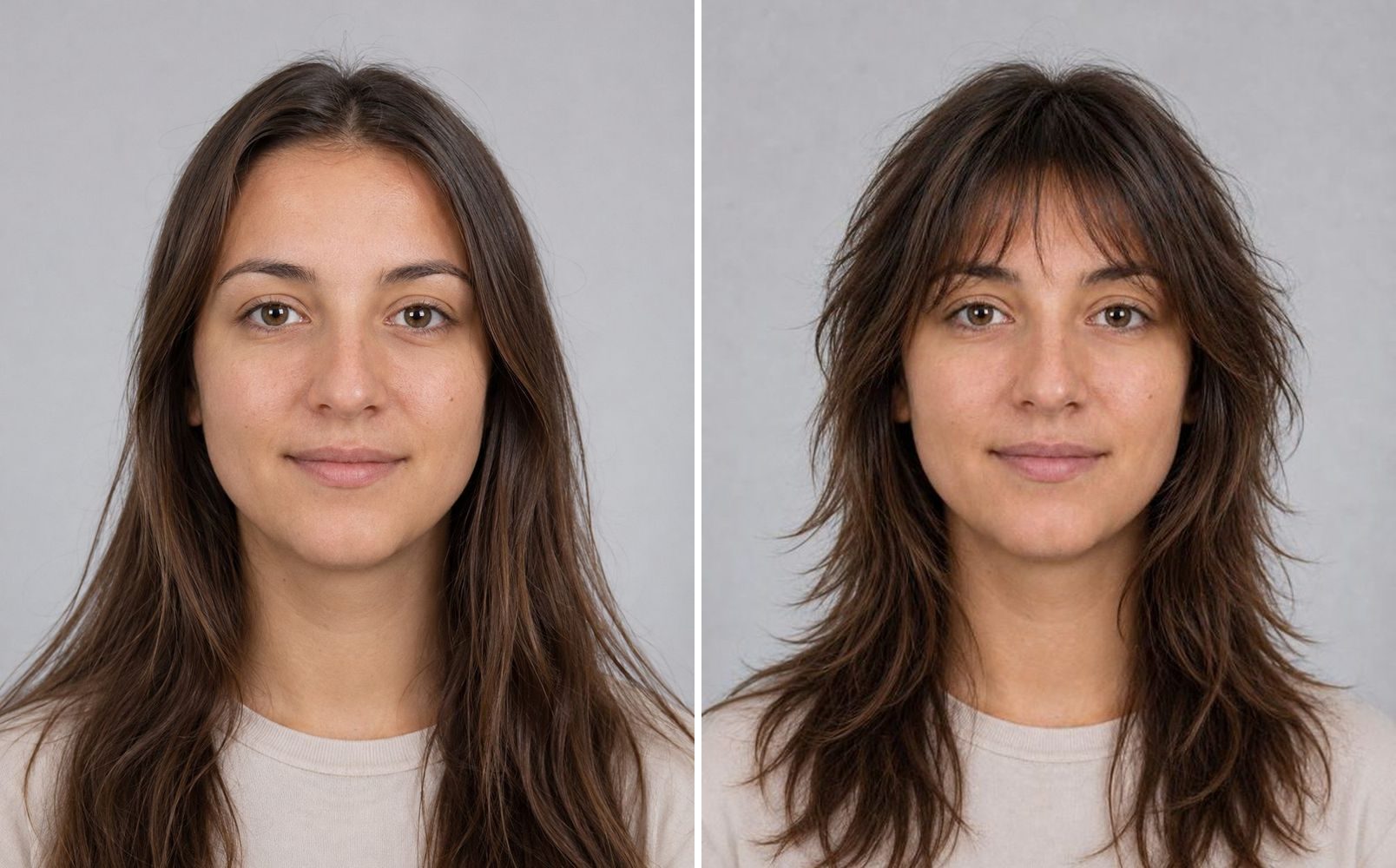
The same face, before and after a shag preview. Notice where the volume moved: from hanging flat beside the cheeks to lifted at the crown and broken into layers.
The collarbone lob — length without commitment
If a shag feels like too much texture, a lob that lands at the collarbone does the quiet version of the same job: the length finishes well below the chin, so the eye travels down and the face reads longer.
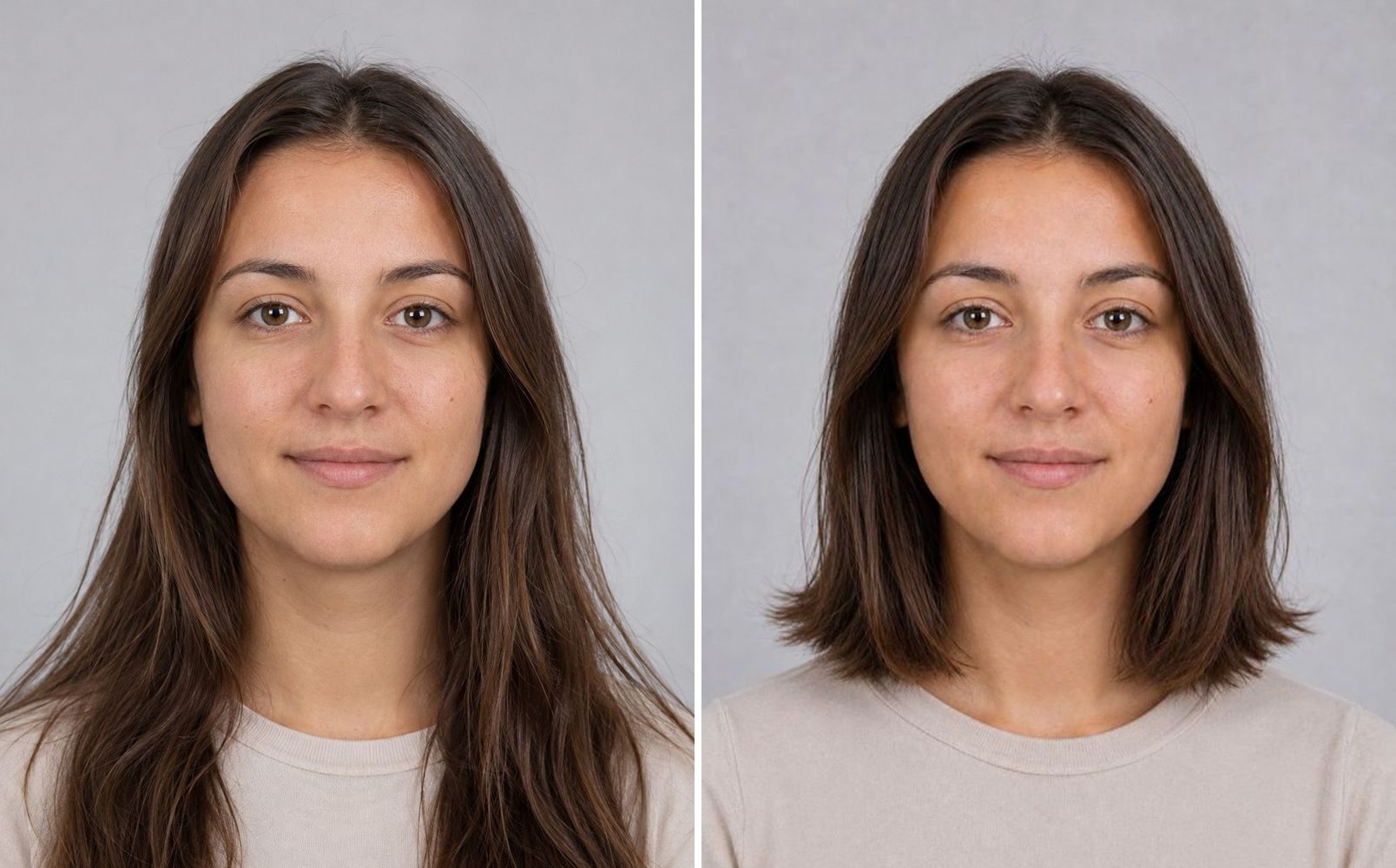
A collarbone lob preview on the same face. Keep the ends a touch uneven or waved — a razor-straight blunt line at the collarbone can go flat.
Also worth trying
- Long layers — the safest possible choice: all length, with layers starting below the chin.
- Curtain bangs — if you want bangs, this is the round-face version: parted in the middle, swept to the sides, leaving a vertical channel of face visible.
- A long pixie — short can absolutely work, but it needs a long, side-swept top. The height and the diagonal do the flattering, not the shortness.
What to skip
- The blunt chin bob — a horizontal line exactly at the widest part of your face, framed by curves. It's the single most repeated mistake. (On a heart or oblong face, the chin bob is excellent — face shape really is the whole game.)
- Straight-across bangs — they shorten a face that has no length to spare.
- Cheek-level rounded cuts — a classic French bob is gorgeous on long faces for exactly the reason it fights round ones: it adds width and curve at the cheeks.
For men: the cuts that work
The quiff — height where you need it
The quiff is the standard prescription for round faces, and it earns it: several centimeters of vertical height, swept up and back, with shorter sides that keep the silhouette narrow.
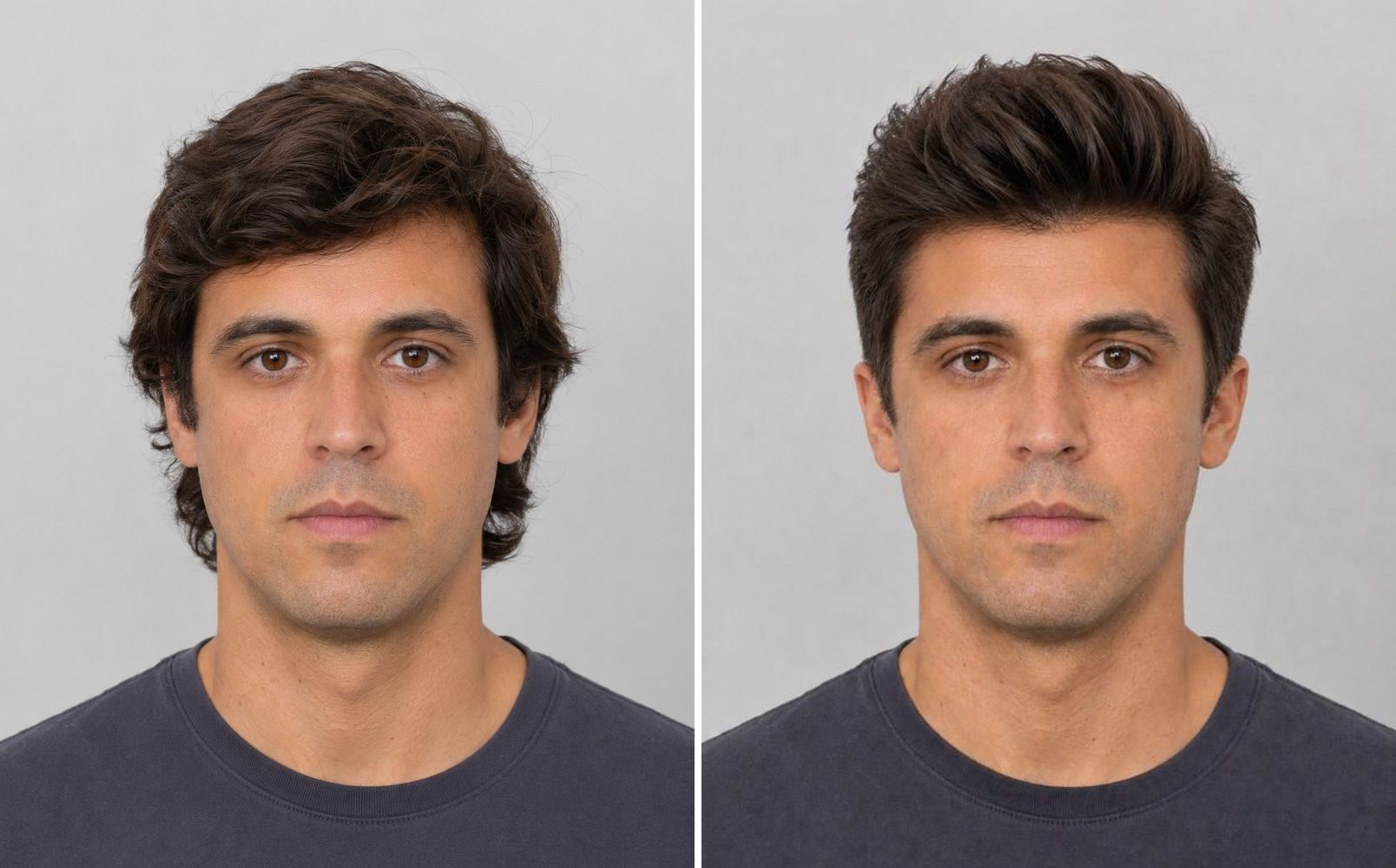
A quiff preview on the same face. The sides matter as much as the top — if they bulk out, the width cancels the height.
The side part with a fade — angles plus structure
A hard side part draws a diagonal line across the head, and the faded sides remove every trace of width at the cheeks. It's the most office-friendly version of the round-face rules.
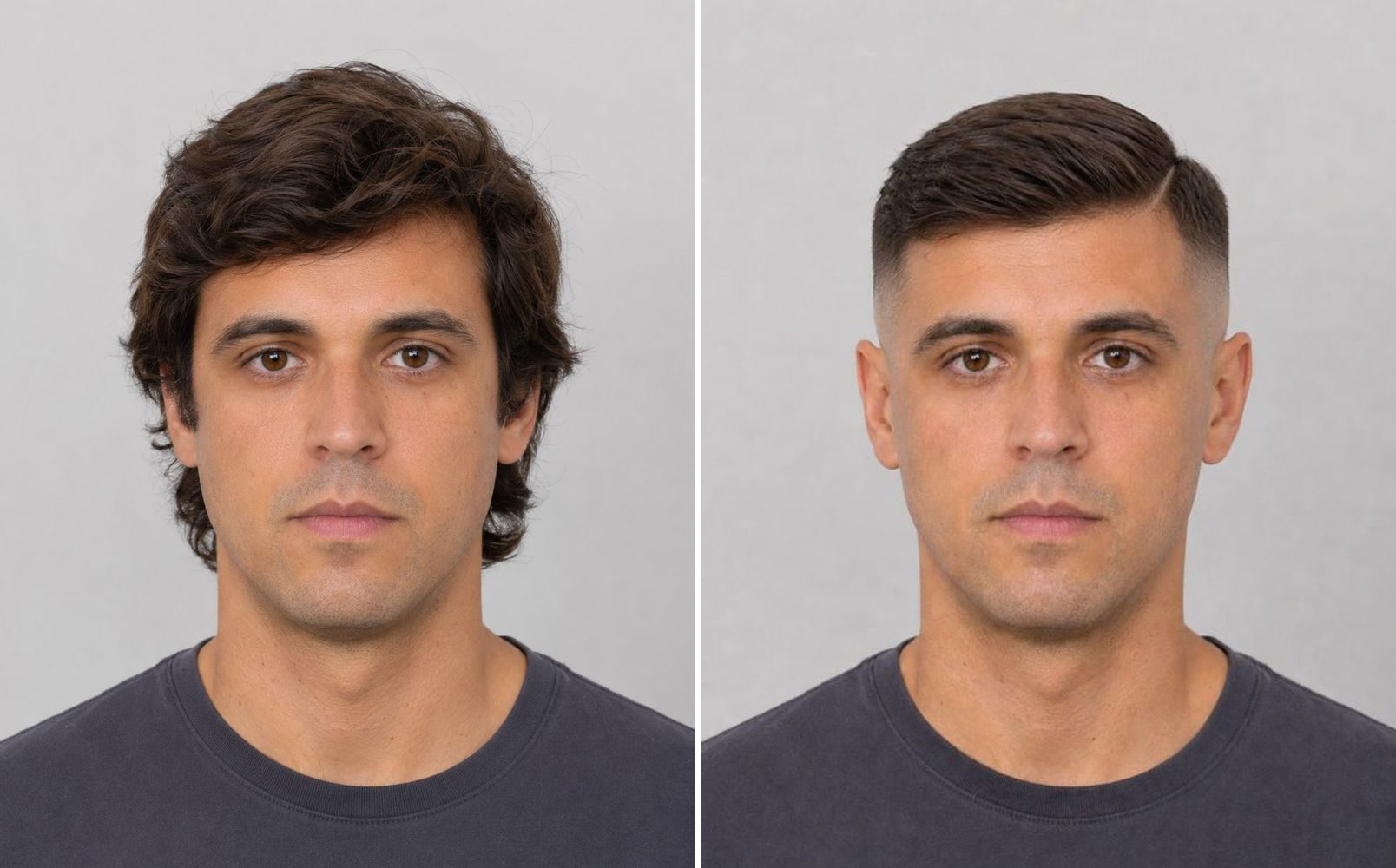
A side part fade preview. The fade does half the work: skin-tight sides make the face read narrower instantly.
Also worth trying
- Crew cut — short, but with a flat, slightly boxy top that adds structure a round face lacks.
- Comma fringe — the K-style curved fringe adds an asymmetric line and works well on rounder, softer faces.
What to skip
- The buzz cut — with nothing to add height or angles, your head's natural shape is the haircut. On a round face that usually means rounder. (Great on square and oval faces — see it on yourself before deciding either way.)
- Full, rounded crops with heavy horizontal fringe — a straight fringe plus curved sides is the male version of the blunt chin bob.
- Bulky sides — whatever the cut, ask for the sides tighter than you think you want. Width at the temples and cheeks is the enemy.
The part nobody writes: your hair type changes the answer
Face-shape rules assume your hair will do what the diagram says. It won't, so adjust:
- Thick, straight hair holds height easily — quiffs and shags behave. Your risk is bulk at the sides; keep them thinned or faded.
- Wavy hair is the shag's best friend — the texture makes the choppy layers automatic. For men, waves add natural volume on top; lean into it.
- Fine hair won't hold a tall quiff by itself. Go for the side part or a textured crop with matte product, and for women, the collarbone lob with soft layers beats a shag that needs volume the hair can't supply.
- Curly hair wants length below the chin so the curl's width sits low, not at cheek level. A curly shag with a longer perimeter works; a cheek-level curly bob is the round-face trap in its most potent form.
See it on your own face before the salon
Everything above is a rule of thumb, and rules of thumb have exceptions — your hairline, your jaw, how your hair actually falls. The way to close that gap used to be commitment; now it's a preview.
- Check your face shape — one selfie, measured in your browser, free.
- Get a ranked shortlist — 115+ real styles scored against your shape.
- Preview the finalists on your own photo in the Studio — same face, same lighting, new hair — before anyone picks up scissors.
And if you're still deciding between shapes and rules, the broader guide — What haircut should I get? — walks through all seven face shapes, hair type and maintenance in one pass.
Frequently asked questions
What is the best haircut for a round face?
For women, a shag or long layers that fall below the chin — anything that adds vertical lines and keeps volume away from the cheeks. For men, a quiff or a side part with faded sides — height on top, tight at the sides. The common thread is adding length and angles rather than width.
Should a round face avoid short hair?
No — short works when it carries height or asymmetry. A pixie with a long, side-swept top or a quiff both flatter round faces. What to avoid is short and rounded: cuts that hug the head and finish in a curve around cheek level, which repeat the circle.
Are bangs OK for a round face?
Side-swept and curtain bangs are — they cut the face with a diagonal line and leave the center open. Straight-across blunt bangs are the risky ones: they shorten an already-equal face and emphasize width at the cheeks.
Do round faces suit middle or side parts?
A side part almost always does more for a round face. It introduces an off-center, diagonal line, which breaks symmetry — and symmetry is exactly what makes roundness read so strongly. A middle part can work, but it needs length below the chin to pull the eye downward.
How do I know if my face is actually round?
A round face is about as long as it is wide, with a soft jaw and full cheeks — the widest point is at the cheeks, not the jaw. It's easy to confuse with square (same proportions, angular jaw). A photo measurement settles it: Stylery's free face shape detector measures the ratios from one selfie, in your browser.