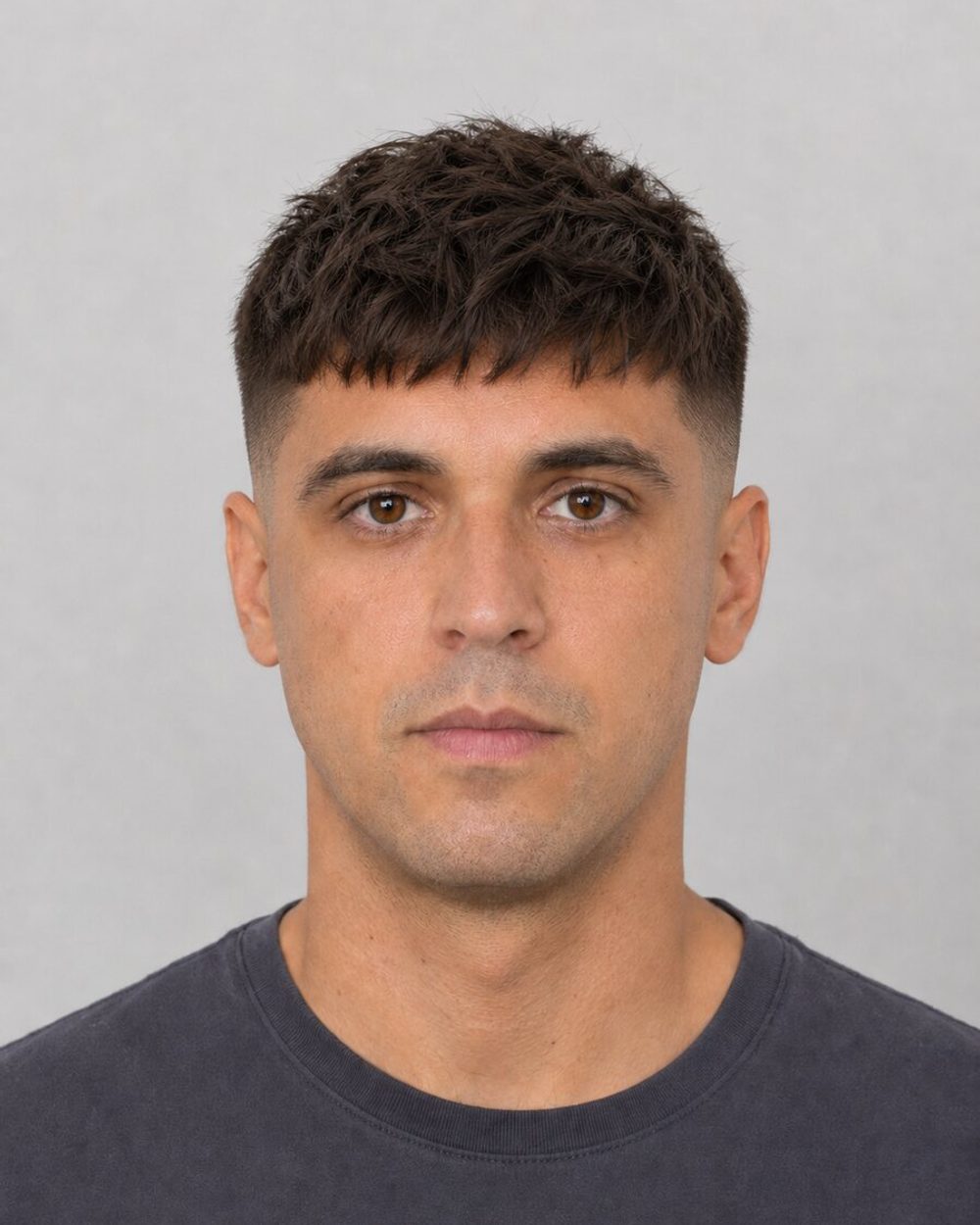
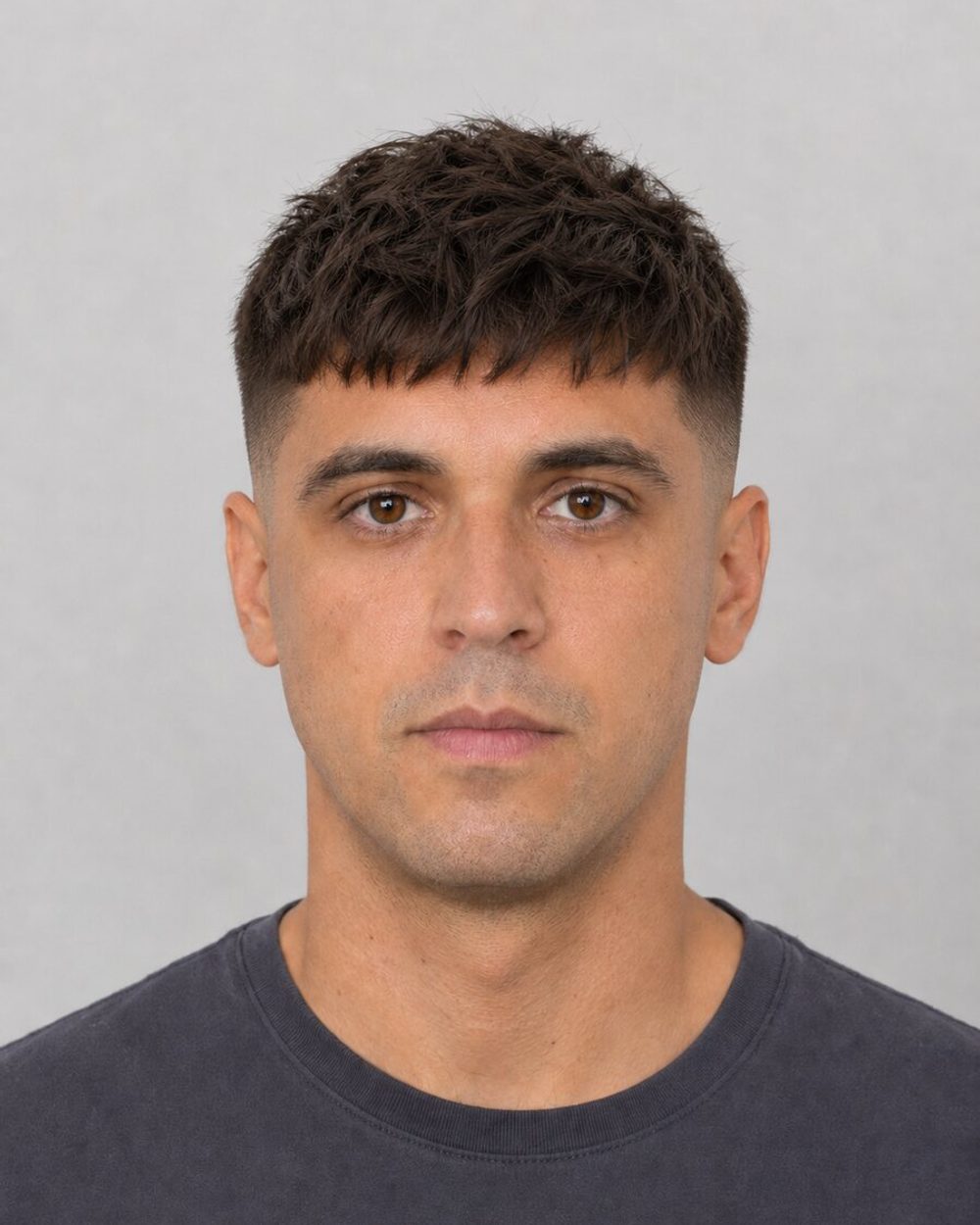
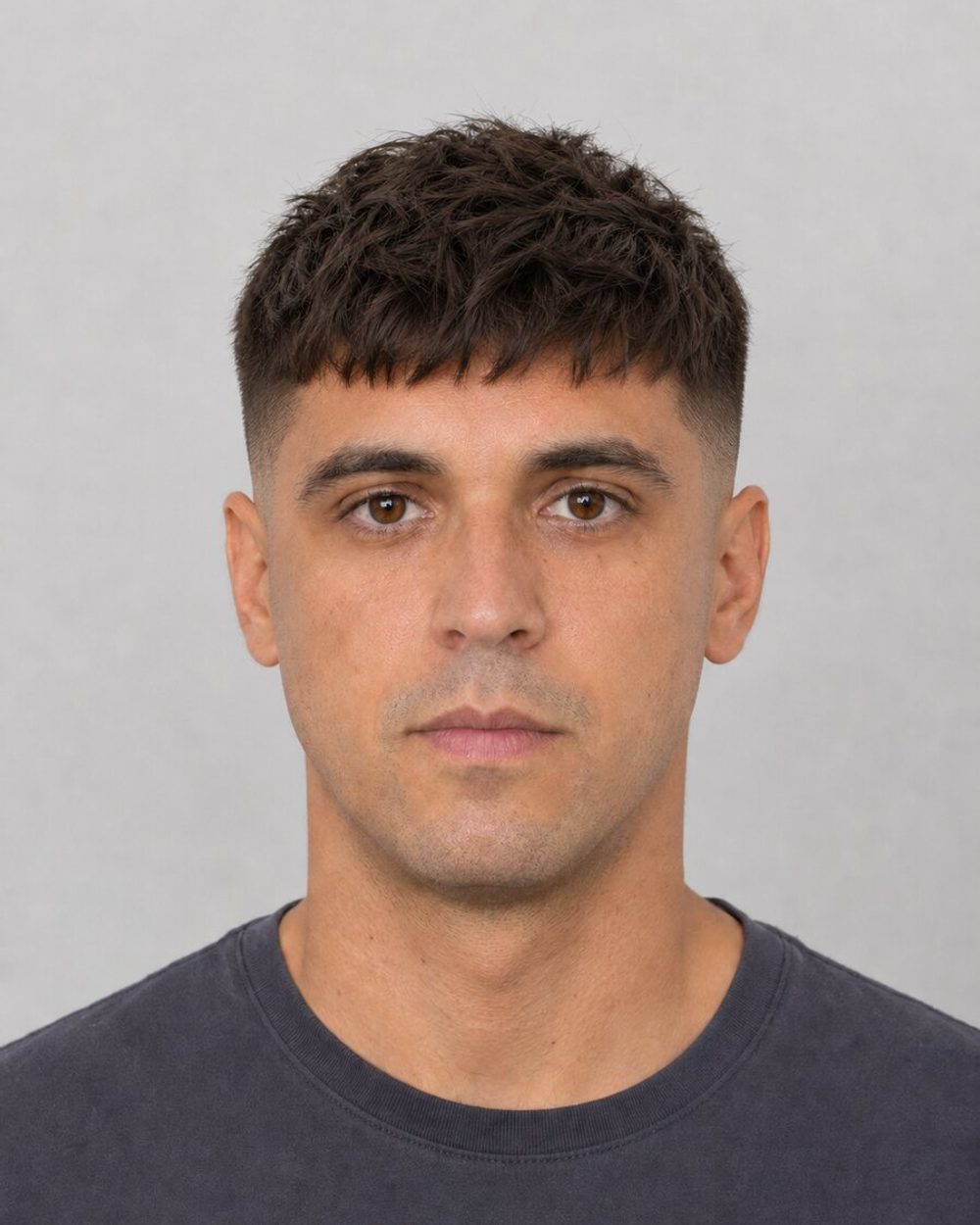
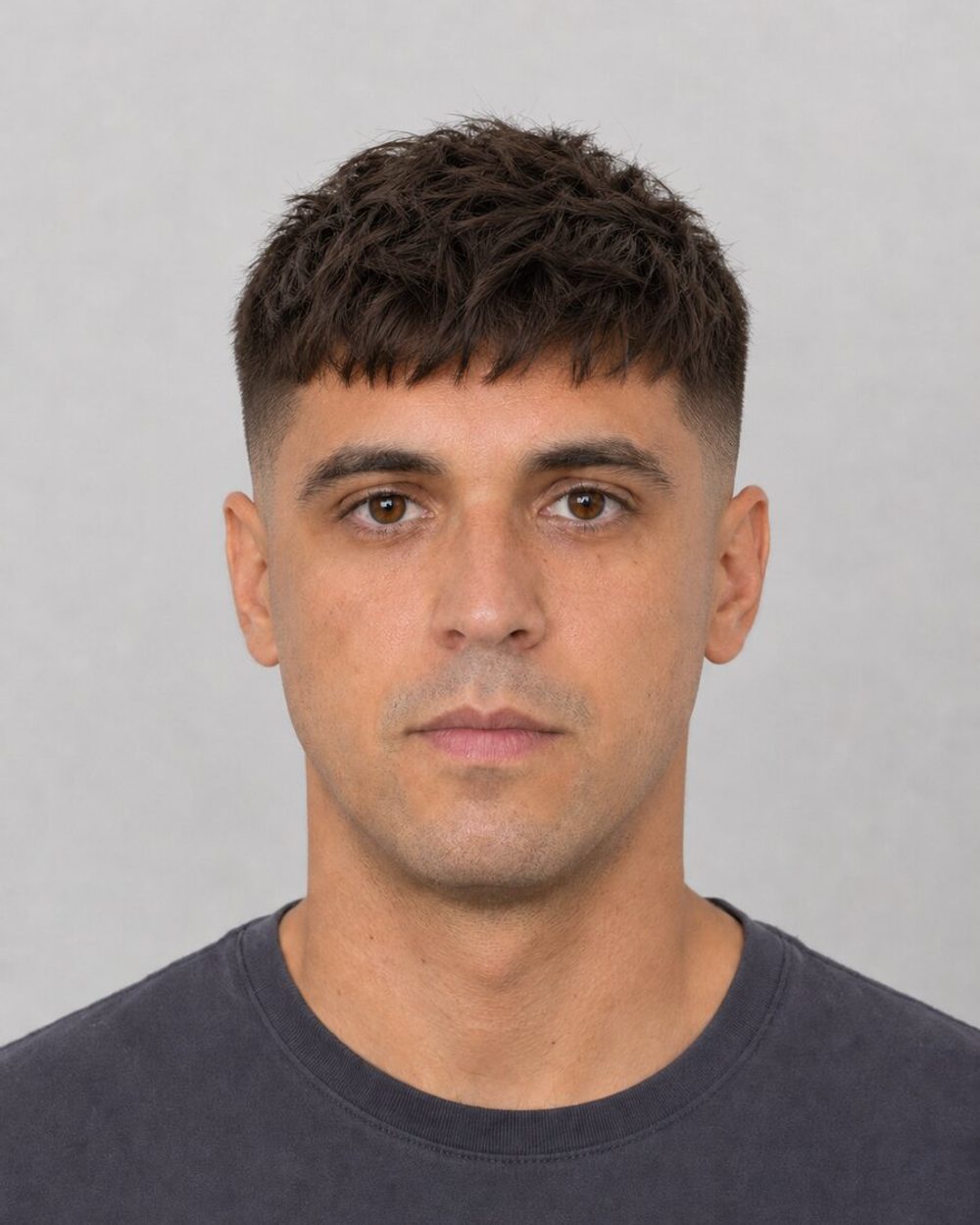
Short Stubble
Even designer stubble with real texture and soft edges — see it mapped to your own face before you skip a shave.


Real result — same face, not a stock model or a filter.
Not sure it suits your face? Check your face shape — free →
Who it suits
Short stubble is one of the most forgiving facial-hair styles because it softens a sharp jawline without hiding it, and the skin still shows through so patchiness is largely invisible. Rounder face shapes benefit from the slight jaw definition it adds; sharper, more angular faces gain a warmer, less severe look. It sits inside the 0.5–2 mm range — typically a 1 or 2 guard on a trimmer — and because the growth is uniform it works whether your beard grows in dense or sparse. Fair skin with light stubble reads clean and intentional; darker skin with heavy stubble often reads even more polished.
What to expect in real life
Short stubble is genuinely low-maintenance compared to any longer style, but it's not zero-maintenance. To stay sharp it needs a pass with a trimmer every 3–5 days, depending on how fast your beard grows — skip a week and it tips into unkempt territory. The cheek line and neckline don't need the crisp geometry of a boxed beard, but a loose neckline cleanup once a week keeps it from looking sloppy. Patchiness is largely hidden at this length because the short hairs blur together, which is exactly why stubble is the go-to recommendation for men whose beard grows unevenly.
How this is different from a filter
A filter tints the lower half of your face with a flat gray or brown wash — you can't see how the hair distributes across your cheekbones, how the edge falls against your jaw angle, or whether the texture suits your skin tone. Stylery re-renders the stubble itself: individual hair texture, the transparent quality at the edges, and the faded-in coverage, all mapped onto your actual photo. Your face shape, skin tone and features stay untouched, so you're seeing the look against your real structure — not a stock model with a similar haircut.